

Sugar Land 18-Wheeler Accidents: Federal Regulations That Affect Your Case
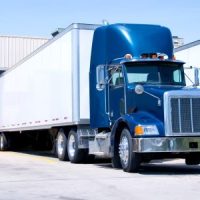
If you or someone you love was hurt in a collision with an 18-wheeler in Sugar Land, you may be wondering what comes next. Who is responsible? What rules apply to commercial truck drivers? And how does any of that affect your ability to recover compensation? These are the right questions to ask, because truck accident cases are not like typical car accident claims. Federal regulations create a detailed legal framework that can either help prove your case or be used by the defense to push back against it. Understanding the basics puts you in a stronger position from the start.
Why Federal Regulations Matter in Texas Truck Accident Cases
Commercial trucks traveling Texas roads and highways are subject to federal oversight through the Federal Motor Carrier Safety Administration (FMCSA). The FMCSA’s regulations govern nearly every aspect of how commercial carriers operate, from driver qualifications to vehicle maintenance to how many hours a trucker can be behind the wheel before taking a mandatory rest break. When a trucking company or its driver violates one of these rules and a crash results, that violation can be powerful evidence of negligence in your injury claim.
This matters enormously for Sugar Land residents. The US-59 and Highway 6 corridors see significant commercial truck traffic every day, connecting distribution centers, industrial facilities, and the Port of Houston. Any one of those trucks is expected to comply with federal safety standards, and when they do not, real people get hurt.
Key Federal Rules That Commonly Come Into Play
Several specific federal regulations tend to surface in 18-wheeler accident claims. These include:
- Hours-of-service rules (49 C.F.R. Part 395): These regulations limit how long a commercial driver can operate a vehicle without rest. A driver who has been on the road too long is a fatigued driver, and fatigue is a well-documented contributing factor in serious crashes.
- Electronic logging device (ELD) requirements (49 C.F.R. Part 395.8): Trucking companies must maintain accurate records of driver hours. ELD data can be critical evidence in proving a driver was in violation at the time of a crash.
- Driver qualification standards (49 C.F.R. Part 391): Carriers are required to vet drivers, verify their commercial driver’s licenses, and review their safety records before putting them on the road.
- Vehicle inspection and maintenance rules (49 C.F.R. Part 396): Trucks must be regularly inspected and kept in safe working condition. Brake failures and tire blowouts that result from ignored maintenance are not accidents. They are preventable.
- Minimum insurance requirements: Under federal law, most commercial carriers must carry at least $750,000 in liability coverage, and some are required to carry up to $5 million depending on the cargo hauled.
Each of these regulations creates a record trail. Preserving that evidence quickly after a crash is critical, because trucking companies and their insurers act fast.
What Violations Can Mean for Your Case
When a carrier or driver fails to follow FMCSA rules, that failure can support a negligence claim. It may also open the door to claims against the trucking company itself, not just the individual driver, depending on the nature of the violation. That distinction matters, because companies typically carry far more insurance coverage than individual drivers.
It is also worth knowing that evidence in these cases, including black box data, onboard camera footage, and driver logs, can be altered or lost if it is not formally preserved through legal action. The sooner a claim is evaluated, the better the chances of securing the evidence needed to prove what happened.
Reach Out to Our Team for Help
When you are dealing with serious injuries and mounting bills, the last thing you need is to navigate a complicated federal regulatory case on your own. At Henrietta Ezeoke Law Firm, we understand that clients need more than legal knowledge. They need an attorney they can talk to directly, someone who treats their case as a priority from day one, not just a file number. That is the kind of personalized, one-on-one representation we provide.
If you or a family member was hurt in a commercial truck collision in the Sugar Land area, we are here to help. Our Sugar Land truck accident attorneys are ready to review your case, explain your options honestly, and fight for the full compensation you deserve. Call us now or contact us online for a free, no-obligation consultation. At Henrietta Ezeoke Law Firm, you come first.
Source:
ecfr.gov/current/title-49/subtitle-B/chapter-III